The visible situation
A conversation becomes tense, coordination weakens, a decision stalls, or the group loses its ability to listen.
Music · Body · Presence
InHarmony.Academy turns music into a space for practicing attunement, regulation, temporality, and improvisation. We design experiences for individuals, teams, families, and communities who want to better understand what is happening in their relationships and respond with greater presence, discernment, flexibility, and adaptability.
Research · Musical practice · Intercultural experience
Human capacity in action
Technology, knowledge, and methodologies create greater value when people have the presence, discernment, and relational capacity needed to turn them into action.
In teams, classrooms, and spaces of professional support, results depend on what people can sustain in real time: listening under pressure, regulating their responses, recognizing the right moment to intervene, and adapting without losing purpose.
Through ARTI and El Cuerpo como Puente®—The Body as Bridge—InHarmony.Academy develops four essential capacities: attunement, regulation, temporality, and improvisation. Together, they strengthen clarity, trust, coordination, and collective response in contexts of change, complexity, and uncertainty.
Knowing what to do matters. Being able to sustain it when the situation becomes demanding is what transforms knowledge into capacity.
The relational challenge
Knowledge, protocols, and tools are put into practice within situations that change in real time. Different needs, histories, expectations, roles, and rhythms meet within them.
A conversation becomes tense, coordination weakens, a decision stalls, or the group loses its ability to listen.
People, roles, timing, spaces, decisions, structures, and power relations jointly shape the conditions for action.
Making resources, tensions, and critical moments visible helps us understand the context and open more conscious ways of responding.
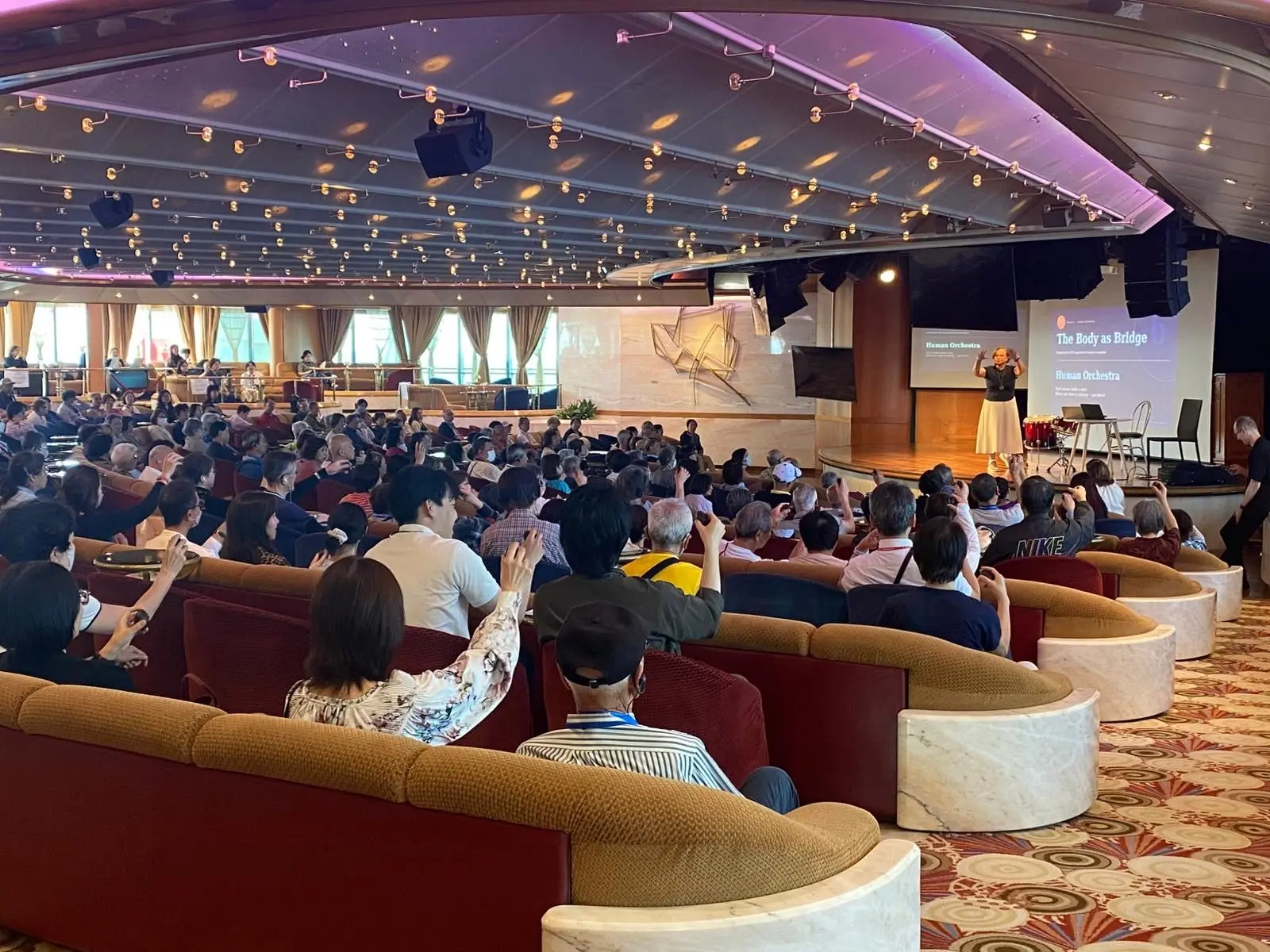 ARTI in practice · Peace Boat 2026
Music is at the center
Music is a way of knowing and organizing relationships through the body and through time.
When we make music together, we learn to hold our own part while attuning to the ensemble; to coordinate breath and pulse, recognize a pause, and adjust our response when something changes. These actions are musical and relational at the same time.
Musical practice is the field of knowledge from which E-A-T and ARTI emerged. It makes bodily presence, the affective climate, shared rhythms, and the responses that take shape between people perceptible.
No musical experience is required.
First E-A-T. Then ARTI.
E-A-T and ARTI serve different and complementary purposes.
Sustained musical practice cultivates dispositions for listening, coordination, rhythm, and improvisation. E-A-T helps us read the field; ARTI helps us move within it.
Contexts of life and practice
Coordination, trust, and responsiveness in meetings, decisions, transitions, and change processes.
Learning climate, different rhythms, participation, attunement, and life together.
Presence and connection in situations of vulnerability, uncertainty, or high emotional demand.
Listening, regulation, and coordination in daily life and across generations.
Find your starting point
The method retains its core while adapting the practice to the people taking part.
Introductory experience
A 90-minute experience that introduces the E-A-T lens and brings the four ARTI capacities into practice.
Discover ARTI Lab ExpressGuitar · piano · voice
Three musical pathways for cultivating presence, listening, regulation, a sense of timing, and creative response.
Explore Positive MusicExperiential workshop
Three hours to explore the relationship between the body, listening, rhythm, coordination, and response.
Discover the workshopAdvanced pathway
For those who want to bring ARTI principles into their educational, artistic, or professional practice.
Explore the trainingPanama · Japan
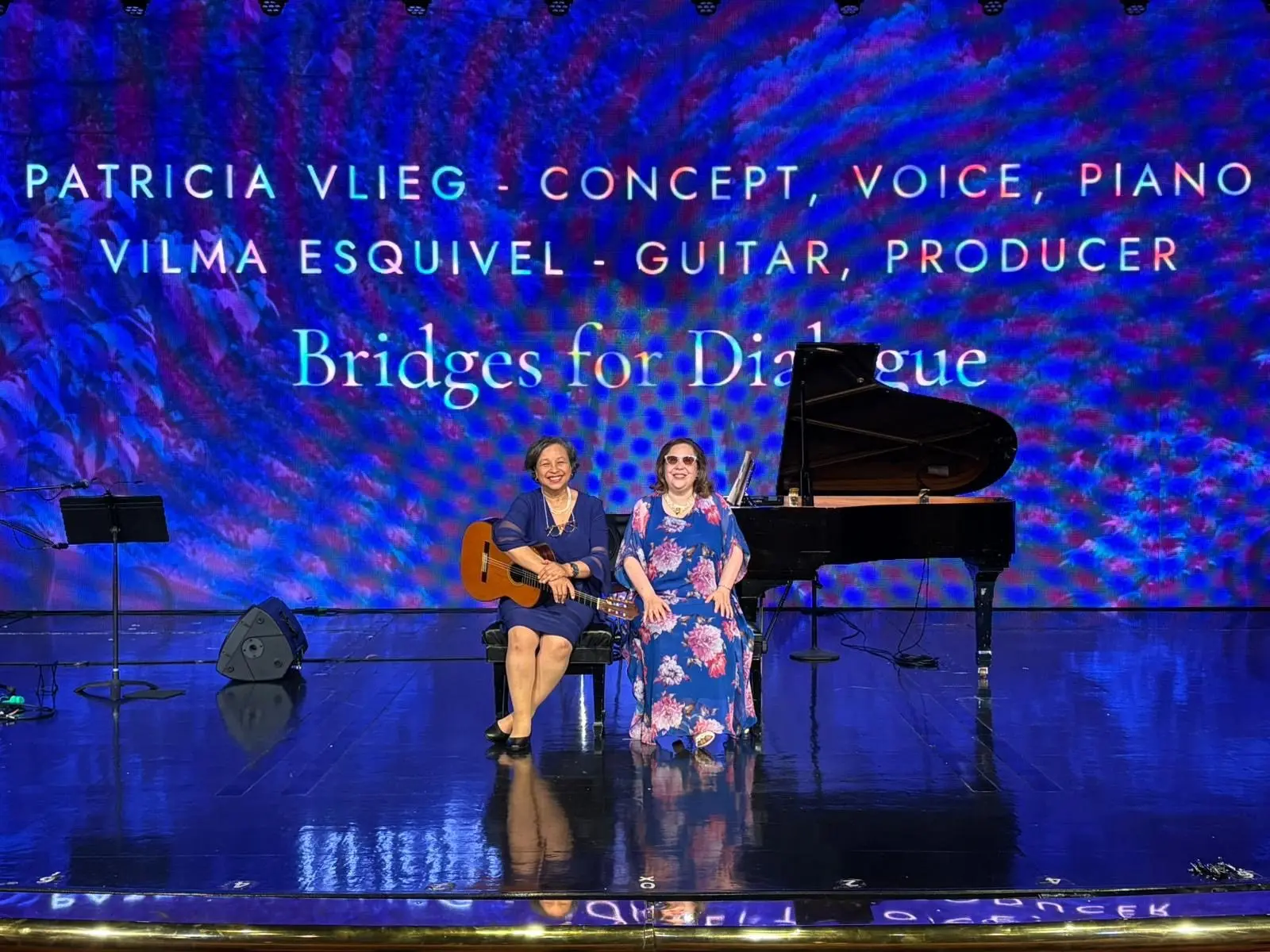
Patricia Vlieg and Vilma Esquivel have developed musical experiences that connect generations, cultures, memory, and identity.
In 2024, they took part in Min-On's family program celebrating 120 years of diplomatic relations between Panama and Japan, together with children in Tokyo.
Explore the case studies on Bridges for Dialogue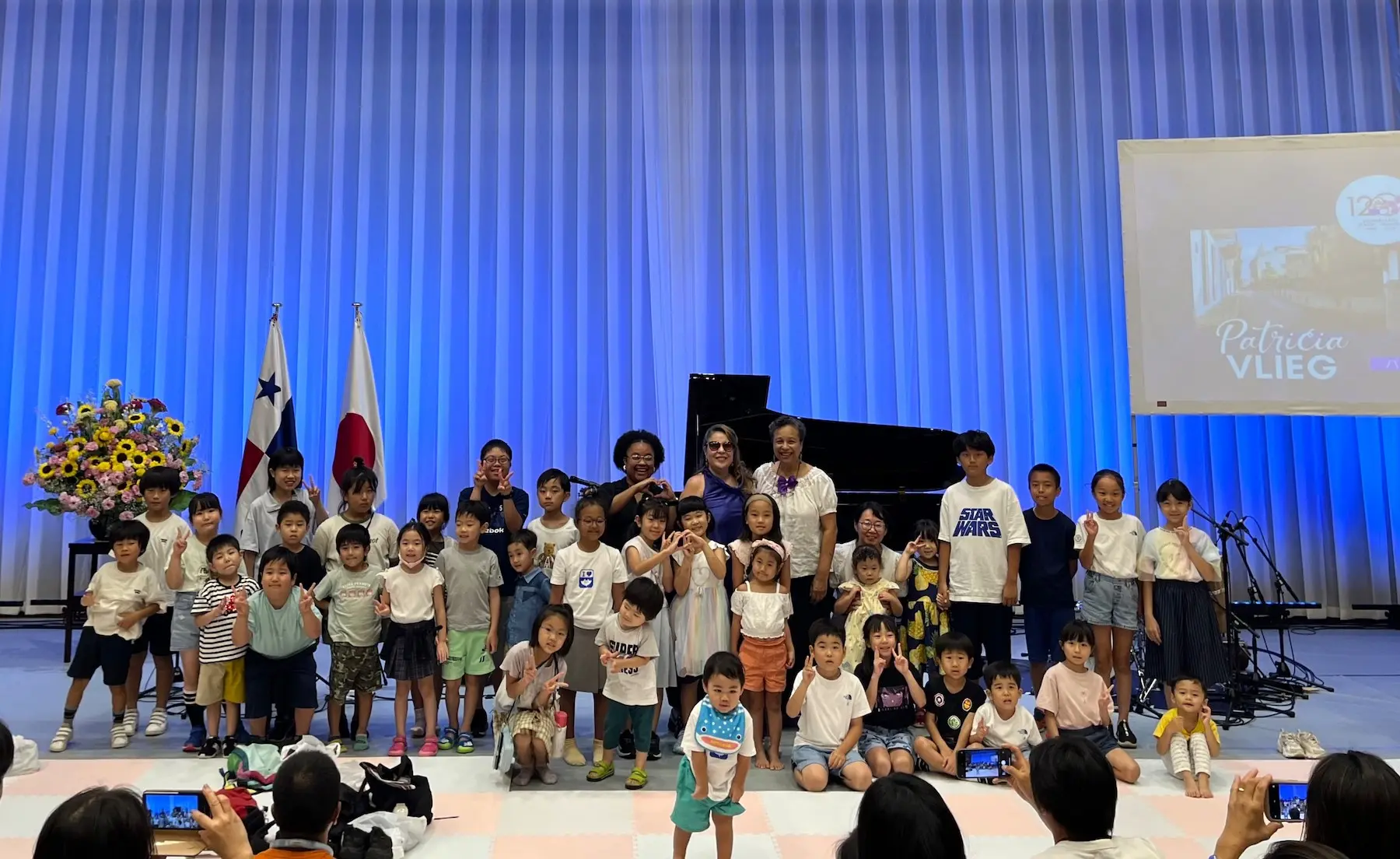
Research and living practice
Vilma developed the E-A-T lens and ARTI framework through her research, From Musicking to Mediating, presented at Soka University in 2026. Patricia brings a musical and intercultural practice built over decades. Together, they sustain a dialogue between research and lived experience.
Meet the foundersRelationships sustain what we want to build
Answer a few brief questions and receive an initial suggestion based on your context, your relationship with music, and what you would like to practice.