Embodied
Observes how the relationship appears in the body: posture, breath, voice, gesture, energy, orientation, and use of space. These signals can anticipate openness, tension, withdrawal, or readiness for encounter.
The ARTI framework
ARTI develops four human capacities—attunement, regulation, temporality, and improvisation—to recognize what is happening in a relationship as it unfolds and respond in a conscious, flexible, and context-sensitive way.
The question at the origin
Many human situations do not break down because knowledge is missing. They break down because the information available through the body, affect, and time is not recognized early enough.
ARTI turns this observation into a practice: learning to notice subtle signals, regulate our response, read rhythms, and create an intervention appropriate to the moment.
The E-A-T lens
E-A-T helps us recognize what is happening in a relationship through three dimensions that act simultaneously and often go unnoticed. It is not a diagnosis of people; it is a way to broaden how we read the situation.
Observes how the relationship appears in the body: posture, breath, voice, gesture, energy, orientation, and use of space. These signals can anticipate openness, tension, withdrawal, or readiness for encounter.
Recognizes the emotions and meanings moving between people, even when they are not expressed directly. This includes trust, threat, belonging, care, and willingness to participate.
Attends to the personal, cultural, and institutional rhythms present in a situation. It helps us notice pauses, urgency, acceleration, and moments of transition that shape the relationship.
The four capacities
If E-A-T broadens our reading of the field, ARTI turns that reading into the capacity to act. The four capacities are practiced together and support responses with greater presence, flexibility, and discernment.
Widen perception before interpreting or acting. Attunement helps us notice signals from the body, the environment, and other people without reducing the situation to a single reading.
Remain present when intensity rises or uncertainty appears. Regulation does not mean suppressing or denying emotion; it means modulating our response so that we retain the capacity to choose.
Recognize that every person, group, and institution has its own rhythms. Temporality helps us discern when to move forward, wait, pause, or intervene.
Create an appropriate response when the familiar script is no longer enough. Improvisation is not random action; it is the ability to adapt what we know with creativity, discernment, and responsibility.
Why music
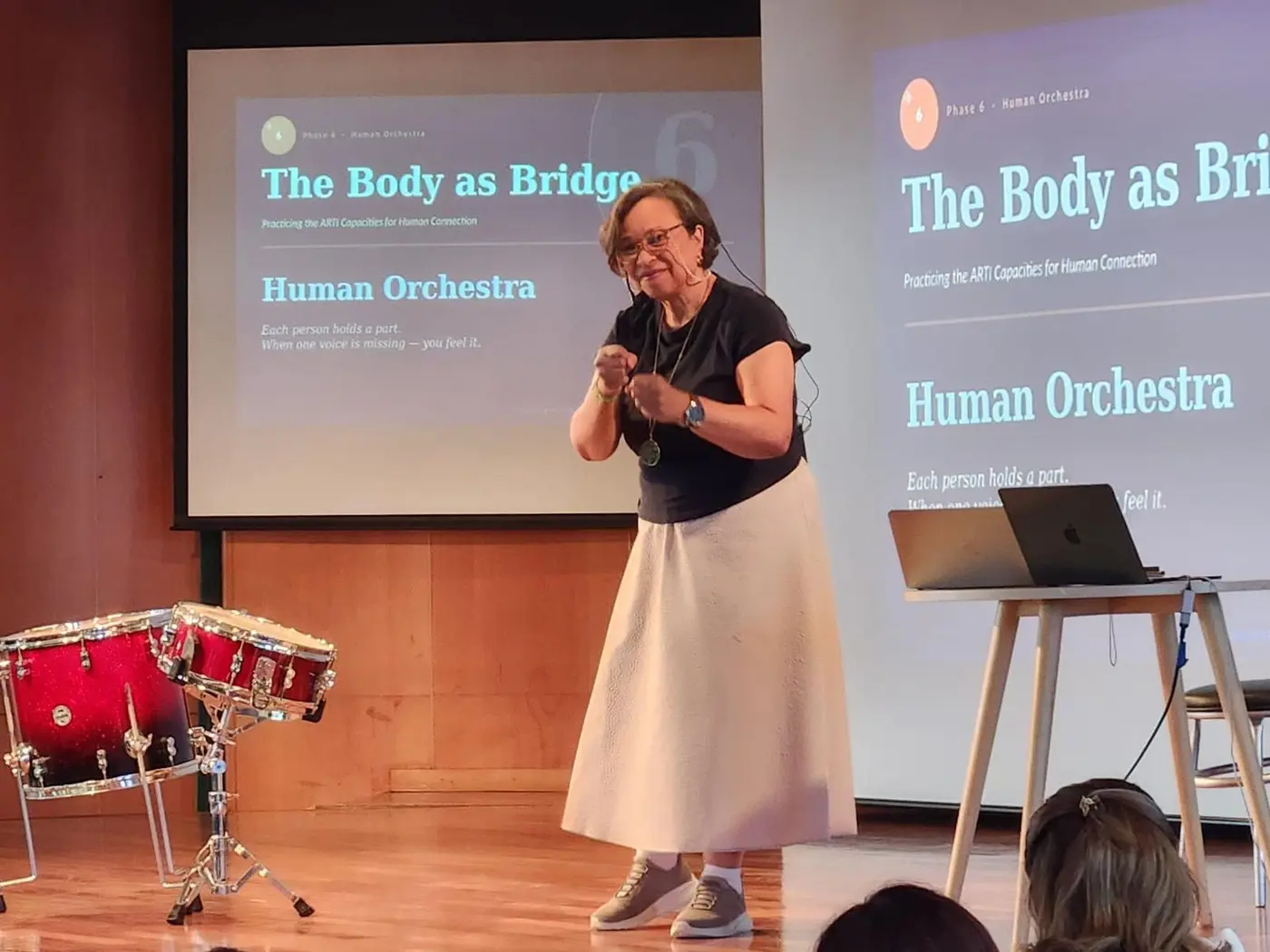
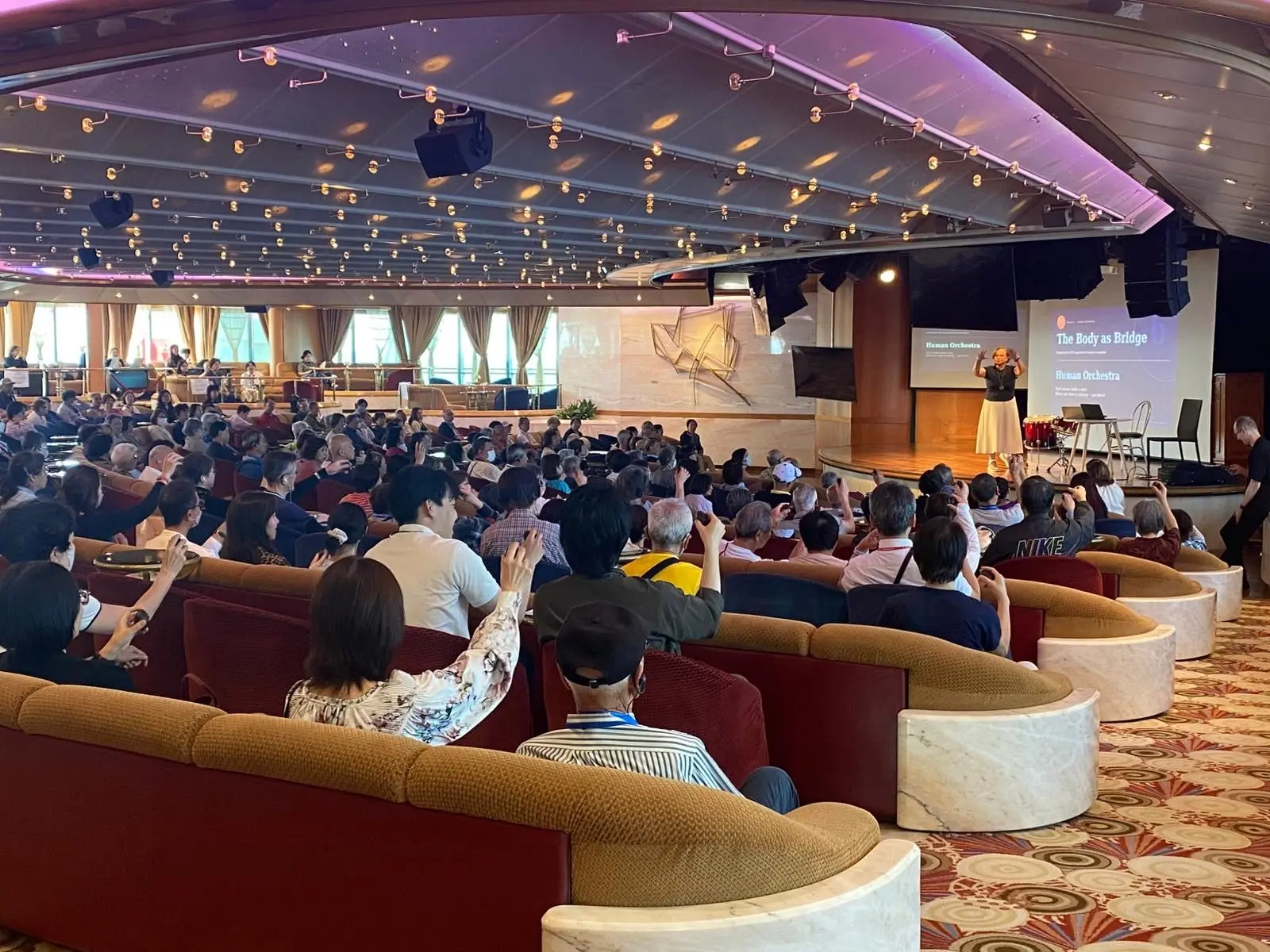
When we make music together, the relational dynamics that often go unnoticed become easier to recognize. We experience how we listen, sustain our own part, enter into attunement with others, respond to different rhythms, and adapt when something unexpected emerges.
That is why we work with voice, rhythm, the body, silence, and improvisation. No musical training is required—only openness to participate, listen, and learn through experience.
Experience the framework