01
Practice it
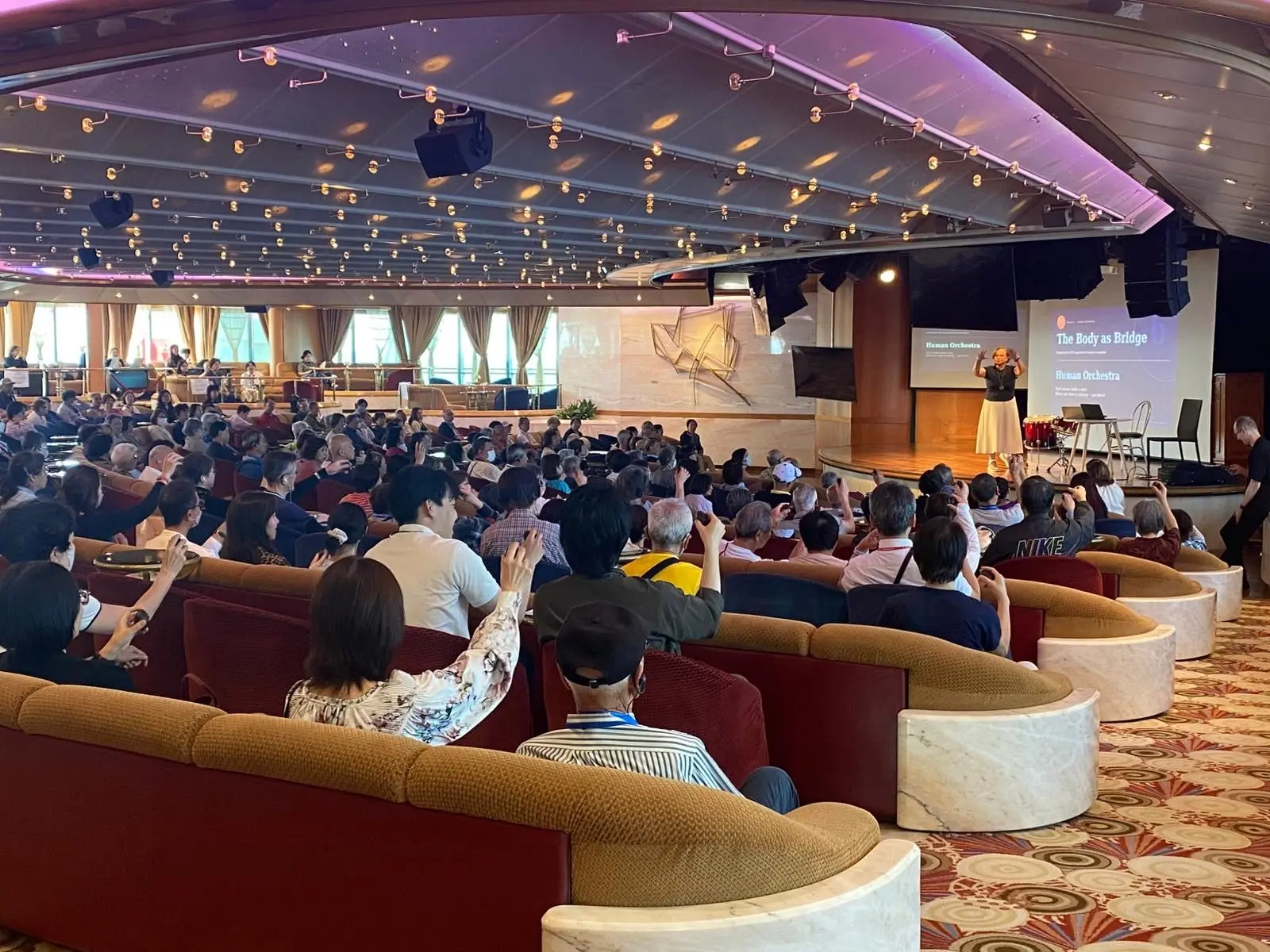
You enter a shared embodied experience that makes relational dynamics tangible.
ARTI Lab · Level 1 · A formative practice of Bridges for Dialogue
Body, Presence and Relational Capacity
Every role that works with and through people rests on relational capacity: reading what is happening, staying regulated enough to remain present, recognizing the right moment, and adapting while holding purpose. ARTI Lab turns that capacity into a practice you can train — in ninety minutes, through the body.
Where Bridges designs the encounter, ARTI Lab trains the capacities that let people remain in it.
The practice
Peace lives in relationships. Living structures are patterns of relationship. And relational capacity accumulates through sustained, shared practice. These are the foundations Bridges works from — and ARTI Lab is where they become something a group can practice directly.
Peace
Peace lives in relationships.
Structure
Living structures are patterns of relationship.
Capacity
Capacity accumulates through sustained, shared practice.
Alongside technical knowledge, every role carries a relational craft: reading a room, staying present under pressure, recognizing timing, coordinating different rhythms, and responding as a situation moves. This is the craft that lets a relationship carry weight — hold through difficulty, renew itself over time, and mean something to whoever inherits it. ARTI Lab makes that craft visible and trainable.
Here, you don't discuss it. You practice it.
The ARTI model
Relationships are lived in the body, they travel through emotion, and they unfold in time. Drawing on peace studies, embodied practice and the physiology of the nervous system, ARTI gives form to what two decades of practice already demonstrated — four capacities anyone can recognize and train.
Notice what is happening.
Read the changes in people, energy and interaction, and let them inform how you respond.
Stay present as things change.
The nervous system continuously reads the room for safety. Regulation is what keeps you present — and your options open — as intensity, uncertainty or emotion rise.
Recognize the right moment.
When to speak, when to listen, when to pause, when to act, and when to give something more time.
Respond to what is actually there.
When the situation changes, create a fitting response, drawing on more than a familiar script.
Why the body?
The nervous system reads a room for safety or threat before a single word is exchanged. When the body feels safe enough to stay present, genuine encounter becomes possible; when it doesn't, dialogue is out of reach no matter how good the intentions. Relational capacity is physiological before it is anything else.
ARTI Lab works through the body — breath, pulse, voice, movement, listening, shared rhythm — because these put relational dynamics in the room in real time, where they can be felt, recognized and practiced. The body is where you learn to remain in the encounter.
The practice is the point. You are the instrument.
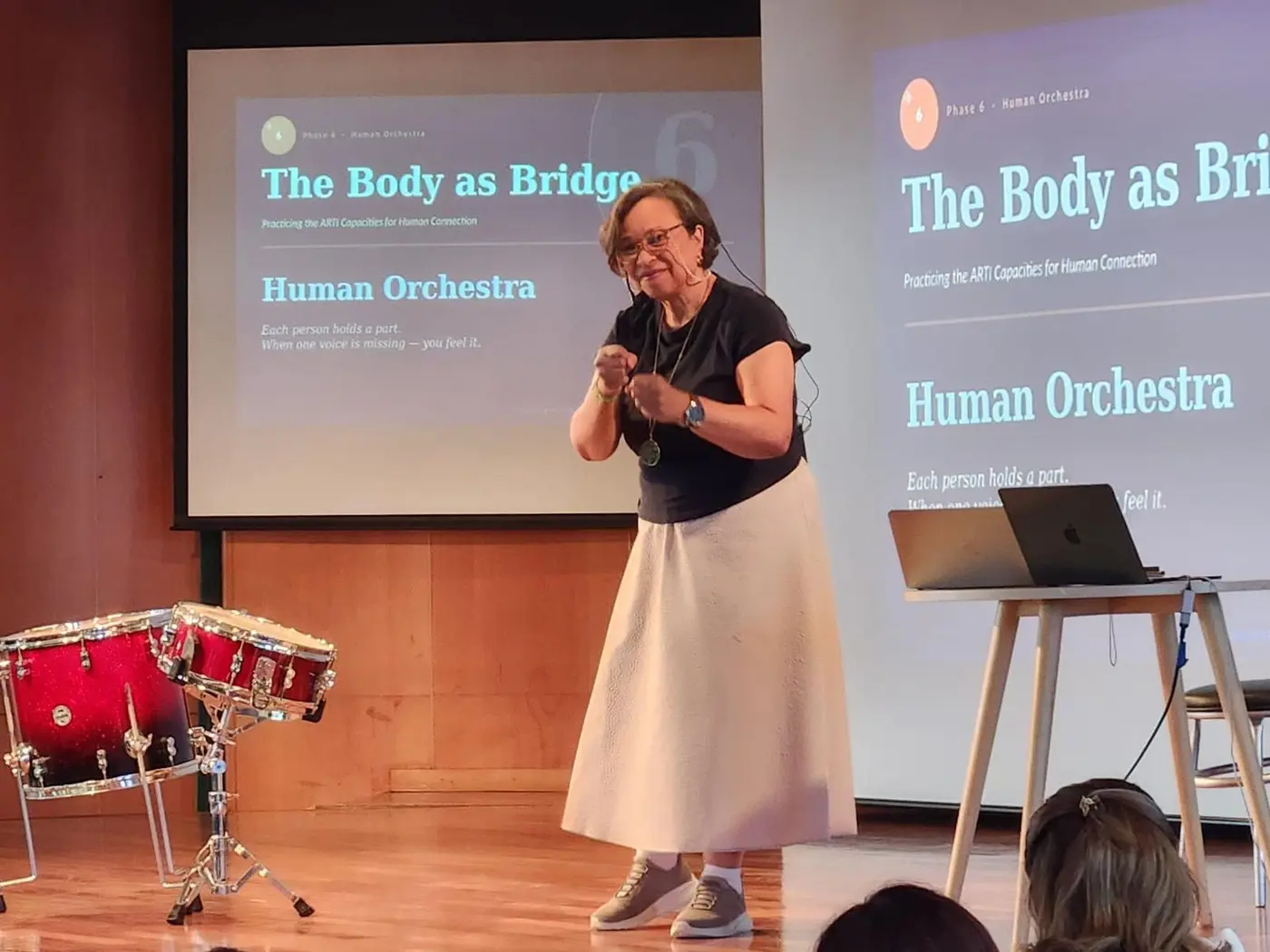
The 90-minute experience
The session moves between practice and reflection. You don't only receive concepts: you observe what happens as you take part, and you translate it into your own reality.
01
You enter a shared embodied experience that makes relational dynamics tangible.
02
You observe the changes in yourself, in others, and in the group.
03
You work with attunement, regulation, timing and improvisation through accessible exercises.
04
The group identifies what happened, what changed, and what made other responses possible.
05
You relate the experience to the real situations you meet in your work and relationships.
Methodology
Every exercise is designed to travel back into your context. The practice is educational: it invites participation on your own terms, with no personal exposure and no performance required.
Embodied practice
Accessible work with breath, pulse, voice, movement, listening and silence. No preparation required.
Guided reflection
Short questions that surface patterns, decisions and ways of relating.
Applied transfer
A direct bridge to situations of work, leadership, education, care or shared life.
A commitment to act
You choose one micro-practice to continue over the following seven days.
Key outcomes
Something they have practiced — and can keep practicing.
Who it is for
The framework stays the same; the design is built to measure. The exercises, the questions and the examples change with the context of the group.
Directors, managers, HR, service teams, and anyone who coordinates or collaborates with others.
Leadership teams, teachers, counselors and trainers working with students and families.
Psychologists, social workers, therapists, facilitators, mediators and community leaders.
Mothers, fathers and caregivers who want to respond with more presence, clarity and flexibility.
A shared experience that brings people together across cultural and linguistic difference.
A participatory workshop alongside talks, panels and presentations. Custom formats available.
Facilitators
Research and practice in conversation. Both facilitators hold MA degrees in International Relations and Peace Studies from Soka University, Tokyo, and both are founders of Bridges for Dialogue. Their paths converge on one question: how can we create the conditions for genuine encounter — and help people remain in it?

Research & methodology
Two decades across management, projects and knowledge in corporate and multilateral settings, including UNICEF. Music therapist and classical guitarist, founder of InHarmony.Academy and creator of the ARTI framework. MA in International Relations and Peace Studies from Soka University, Japan, and Visiting Researcher at the Min-On Music Research Institute, Tokyo.

Artistic & intercultural direction
Panamanian singer, multi-instrumentalist and composer with an international career. Her research on folk songs as instruments of decolonial peacebuilding gives academic form to two decades of practice. She has represented Panama on international stages, including Japan, and her work connects identity, memory, listening and human rights.
Vilma brings the research and the ARTI framework. Patricia brings an artistic and intercultural practice built on real stages. Together they turn theory into a living practice.
Format and logistics
Body, Presence and Relational Capacity is Level 1 of ARTI Lab: an introductory experience that combines embodied practice, guided reflection and transfer to daily work.
Investment is shared through a proposal once the group, date, venue and requirements are defined. For conferences and larger programs, custom formats are available.
Next step
We design each edition with you. We begin with a 30-minute discovery conversation to define the participant profile, identify the relational capacities that matter most, and confirm date, venue and requirements. Then we present the final design and proposal.
ARTI Lab
The art and science of the encounter — trained, not just designed.
A formative practice of Bridges for Dialogue.
Panama City · Tokyo
ARTI Lab is an educational and experiential practice grounded in peace studies, embodied learning and the physiology of presence. It is not clinical assessment or treatment. Every session sets agreements of respect, voluntariness and confidentiality.